Get ready for a meeting with a coaching brief
For coaches and therapists. One private page per student that gathers what they share with you, so you can prepare for your next meeting in a few minutes.
A coaching brief is a private page for each student you coach, or support as their therapist. It gathers what they share with you in one place to read before you meet: their strengths, what they're working on, the next steps you agreed, their learning profile and what has happened since you last met. The student doesn't see it.
1. Open a brief
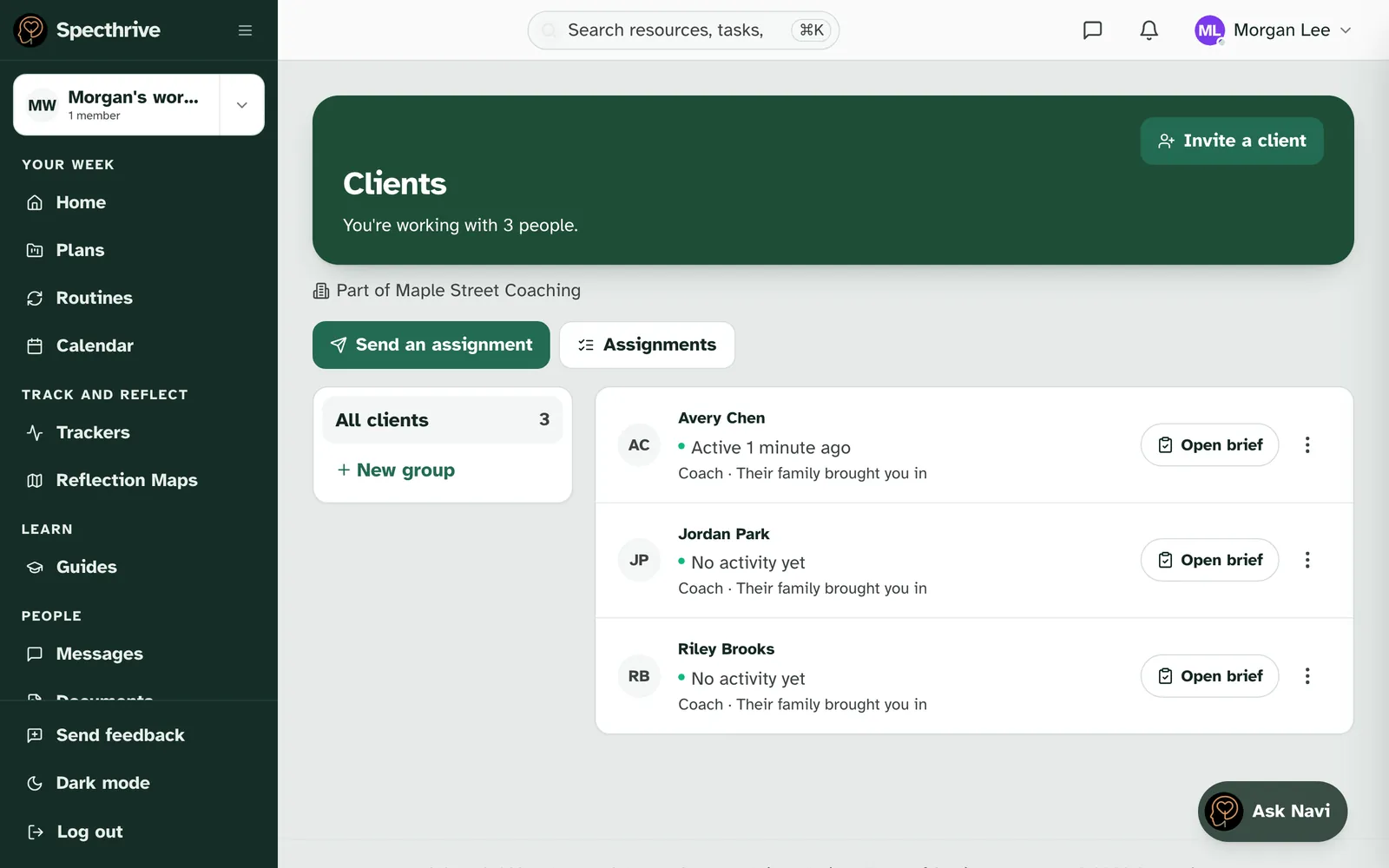
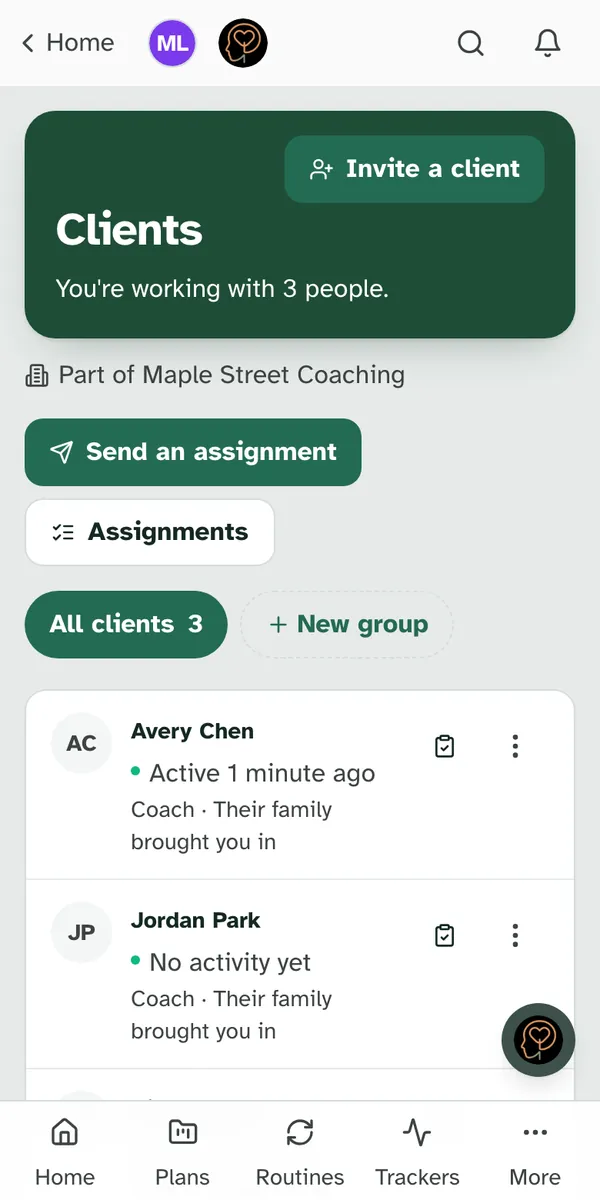
Open brief is on each student's row. On Clients, a student you coach, or support as their therapist, has Open brief on their row once they've accepted your invite. On a phone it's the clipboard icon on the row.
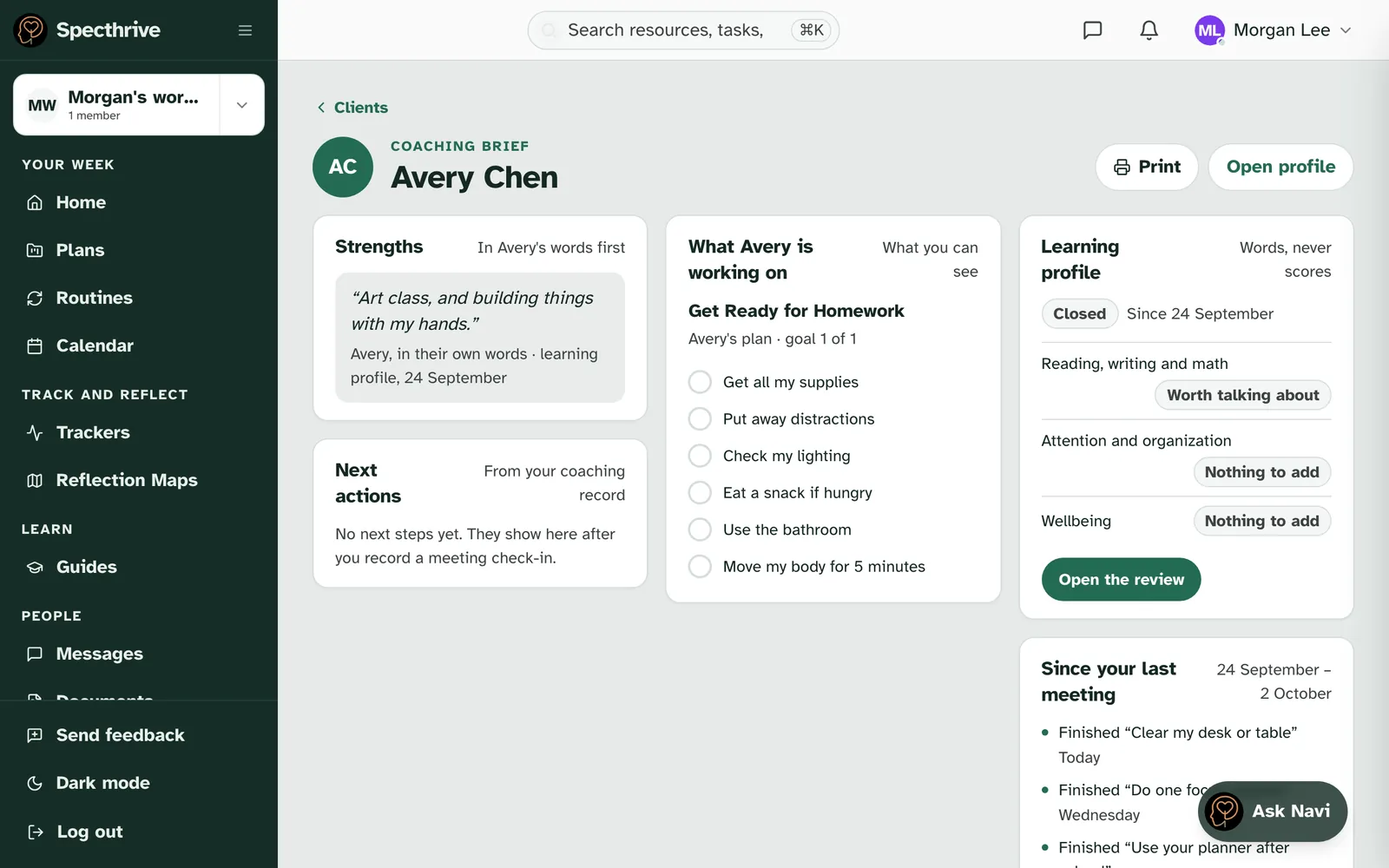
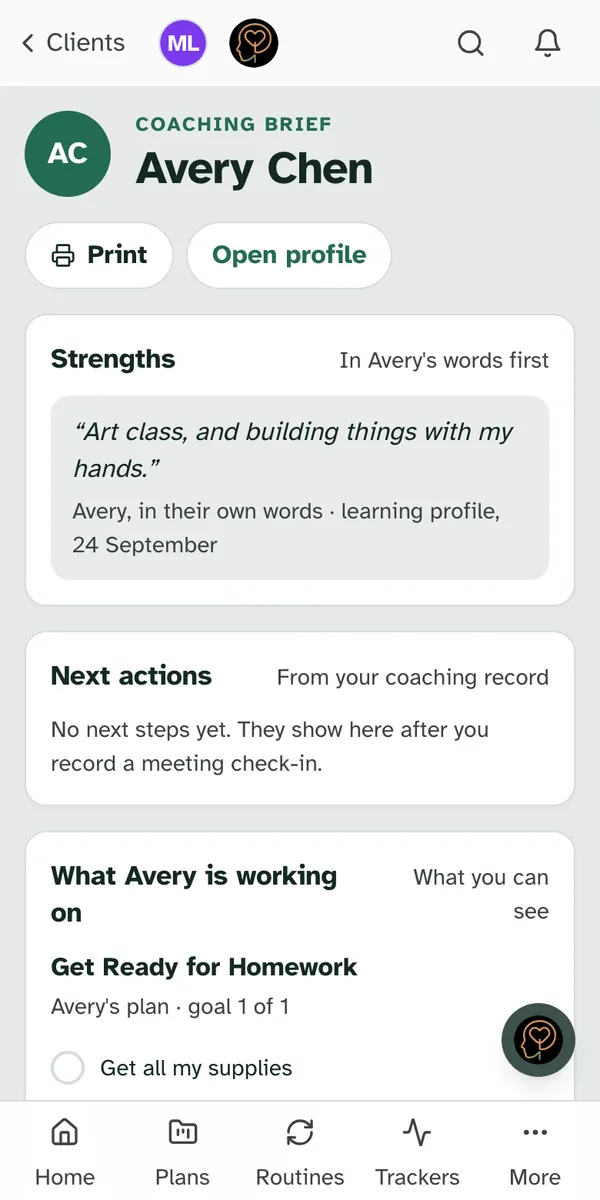
The top says who it's for. The page opens with "Coaching brief" and the student's name. If a check-in you recorded set a next meeting that's still ahead, it adds "Prepared for" and that day. Each questionnaire counts only its latest check-in, and with more than one, the soonest meeting shows. Print gives you a clean copy to take into the meeting (not in the iPhone app), and Open profile opens their profile.
What a student shares shows only once you're linked to them. Until then, a brief usually reads "This brief isn't available" and "A coaching brief opens for a student you coach, or support as their therapist, once they've accepted your invite."
2. What's on it
Five short parts, the student's own words first. Each part says where it comes from, and each has a calm line for when there's nothing to show yet. The lines use the student's first name; here it's Avery.
| Part | What it shows | When there's nothing yet |
|---|---|---|
| Strengths | Their own words from their learning profile first, then what you noticed in your check-ins, each with where it came from | "Nothing here yet. Strengths show up after your first strengths check-in, or once Avery shares a learning profile." |
| What Avery is working on | Their active goal and its steps, their routines this week, such as "2 of 5 this week", and the guides you shared with them, with the version | "Avery hasn't set an active goal yet. When they do, it shows here with its next steps." |
| Next actions | The next steps from your check-ins, who owns each ("Avery owns it", "You own it" or "You both own it"), since when, and how the last check-in went | "No next steps yet. They show here after you record a meeting check-in." |
| Learning profile | Where it is, such as "Waiting for review" or "Reviewed", the recorded reads and their date, and Open the review | "No learning profile yet. When Avery fills one in and it's reviewed, the reads show here." |
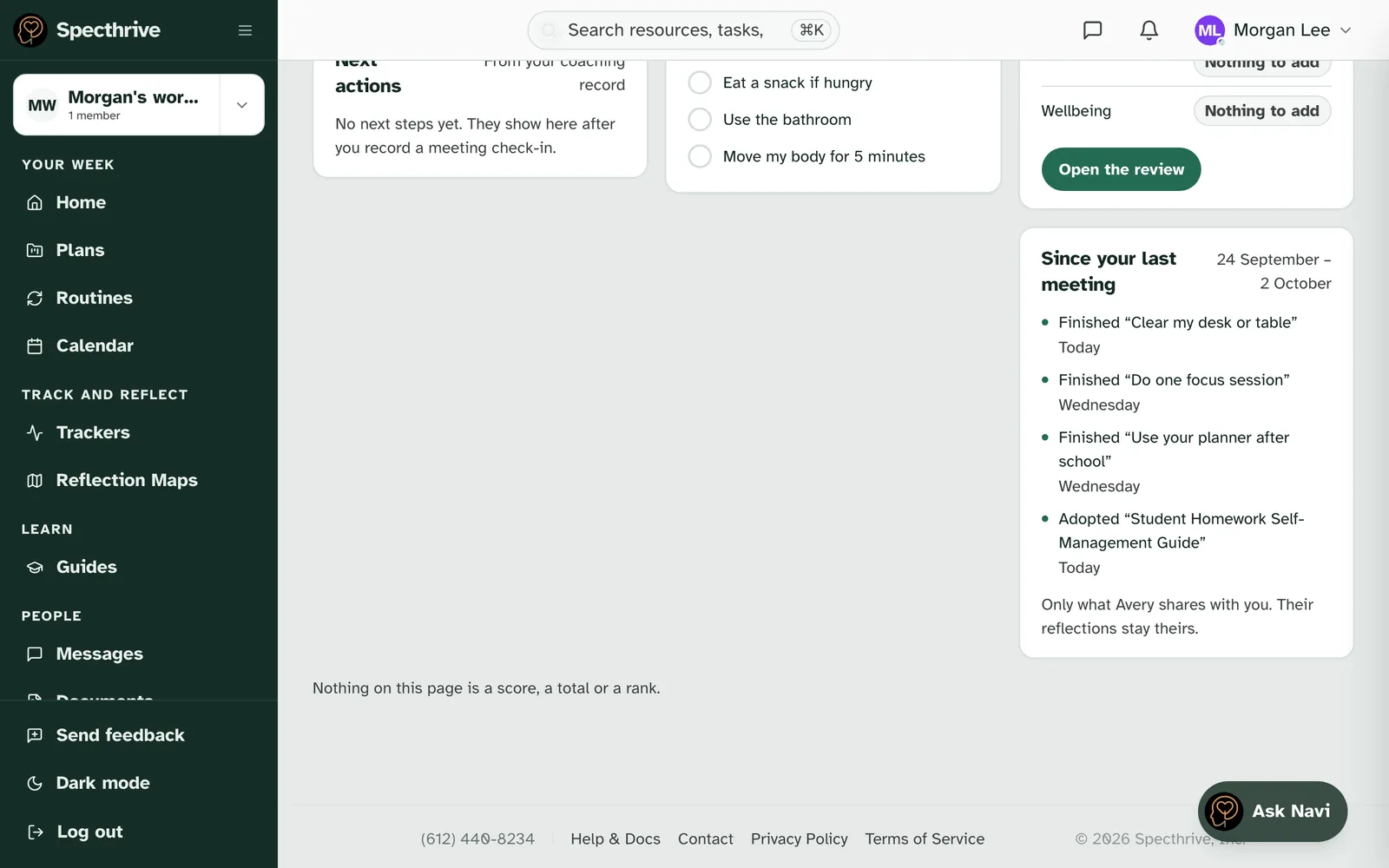
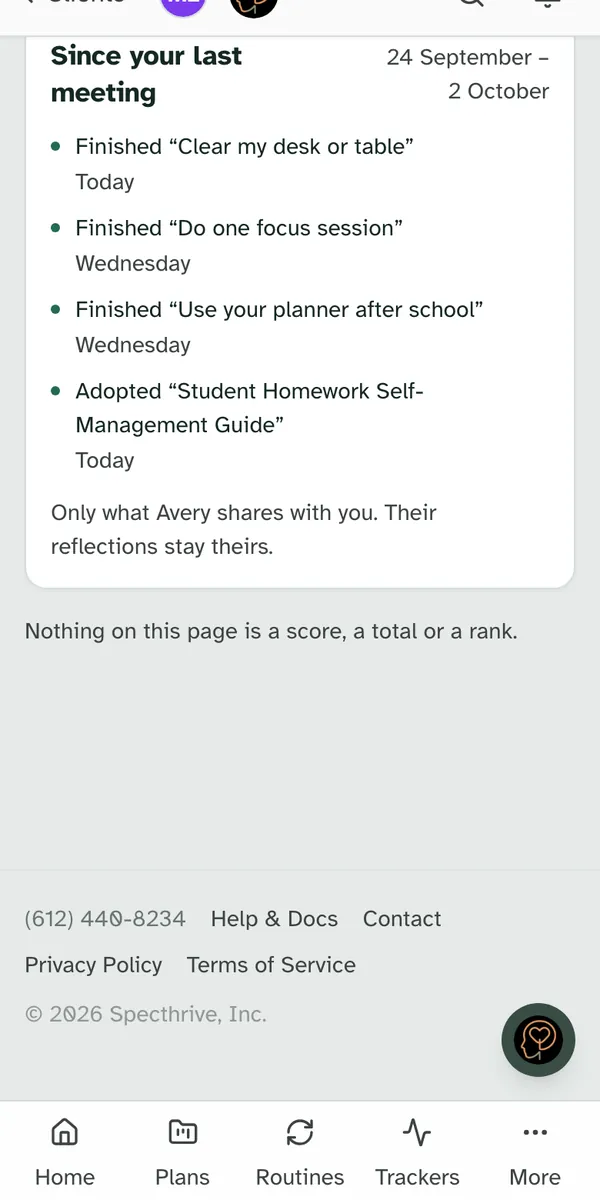
| Since your last meeting | Tasks they finished, routines they did, guides they adopted and trackers they logged since your last check-in | "A quiet stretch. Nothing new to show for these dates." |
The bottom of the page says it plainly: "Nothing on this page is a score, a total or a rank."
With no check-in yet, the last part covers two weeks. It's headed "The last two weeks" until you record a meeting check-in. See Keep a coaching record.
It also covers two weeks when they don't share Trackers. Your meeting dates come from that area, so the heading stays "The last two weeks" even when you've recorded a check-in.
3. It shows only what they share
Each part follows what the student shares with you. Strengths, Next actions and the Learning profile come from what they share as Trackers, and so do your meeting dates. What Avery is working on comes from Plans. If they stop sharing an area, its part says so calmly instead, for example "Avery isn't sharing plans with you right now. Their goals and routines stay private until they do." Since your last meeting shows only the areas they share, and ends "Only what Avery shares with you. Their reflections stay theirs."
Only your own coaching record. The questionnaires, check-ins and next steps on a brief are the ones you asked for and wrote. Another professional working with the same student never sees yours on their brief, and you never see theirs on yours. A named reviewer still reads every check-in on a questionnaire they review, yours included (see Who reads the answers in Keep a coaching record).
Getting help
Tell us if something looks off. If a brief doesn't match what you expect, or a student you work with has no Open brief, get in touch. Tell us which page you were on and roughly when. There's no need to share the student's name or anything about them.
Still have a question?
If this guide did not cover your situation, reach out. We read every message.